

Michelle Rourke is an Australian Research Council (ARC) Discovery Early Career Research Award (DECRA) Fellow at Griffith Law School. Her research focuses on how the United Nations’ Convention on Biological Diversity, its Nagoya Protocol and the World Health Organization’s Pandemic Influenza Preparedness (PIP) Framework regulate access to pathogen samples and digital sequence information (DSI), and how to ensure benefits associated with R&D on pathogens are shared in a fair and equitable manner. She is a member of the Global Health Law Consortium, the DSI Scientific Network and the Indo-Pacific Initiative on Sustainable Animal Health Cooperation.
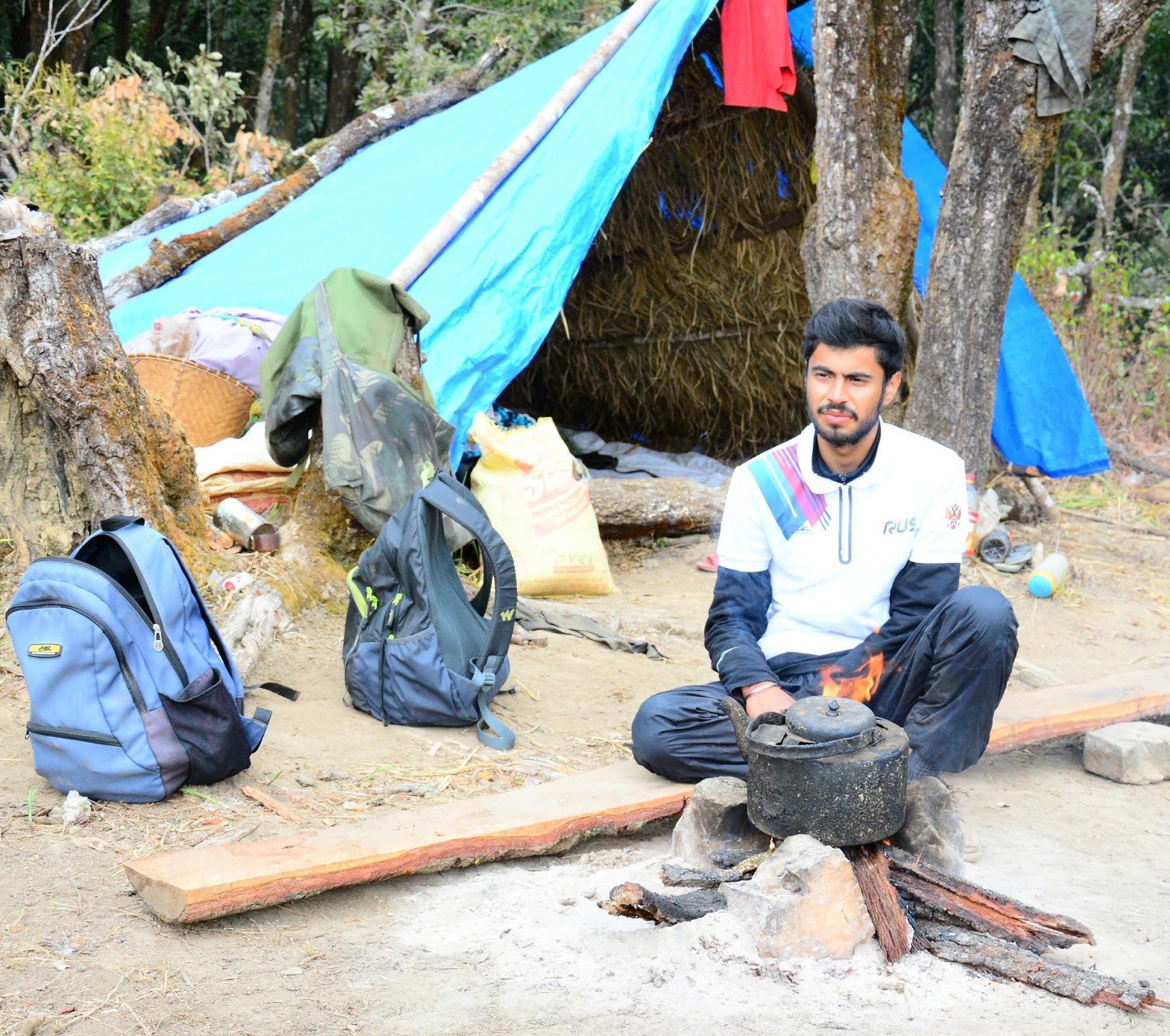
This talk examines how animal health serves as a critical yet underexplored lens to understand the sociopolitical dynamics of livelihoods in India. Drawing on fieldwork and case studies from the Eastern Himalayas and central India, the research interrogates how gender, governance, and ecological pressures intersect in shaping livestock-based economies. By centering animal health as both a material and relational domain, this talk bridges ecological and political inquiries, showing how livestock well-being is deeply entangled with gendered labor, policy neglect, and competing visions of development. It argues for reimagining pastoral governance through integrative frameworks that value women's care work, sustain animal vitality, and support just conservation futures.
Devashish Saurav, PhD Candidate
After completing a B.A. (Hons.) and M.A. in History from the University of Delhi, Saurav pursued an M.Sc. in Heritage Conservation and Management at the Wildlife Institute of India, UNESCO C2C. Currently a PhD researcher at Michigan State University, Saurav’s academic interests lie in understanding how communities live on and with the land, maintaining relationships with landscapes through everyday practices of resource use and management. Saurav’s current research focuses on issues of food security and conservation-induced dispossession in India, exploring how these processes impact livestock-dependent communities and their ability to sustain their pastoral ways of life.
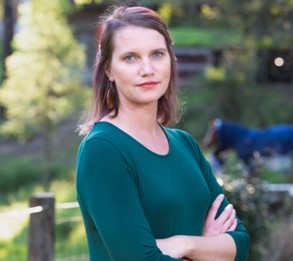
Dr Katie Woolaston believes that biodiversity conservation should be mainstreamed into all areas of governance from local, to international, as a means of mitigating the triple planetary crisis. Katie holds a Masters in Law (specialising in Human Rights & Social Justice) from the University of New South Wales, and a PhD in Law (on the intersections of wildlife welfare, conservation and social justice) from Griffith University.
Katie’s research is focused on international and domestic wildlife law and the regulation of the human-wildlife relationship through the One Health approach. She is particularly interested in using the social sciences to resolve long-held and deeply-rooted attitudes and values that are contrary to conservation and embedding such processes in law and policy. She was an expert on the Intergovernmental Science-Policy Platform on Biodiversity and Ecosystem Services (IPBES) panel concerning Biodiversity and Pandemics, and is the Chair of the Technical Advisory Group of the United Nations Environment Program’s 'Nature4Health' Initiative. Her first book, titled ‘Ecological Vulnerability: The Law and Governance of Human-Wildlife Relationships’ was published by Cambridge University Press in 2022, and her second, ‘The Cambridge Handbook on One Health and the Law’ will be published in 2025.